
Invited Speaker
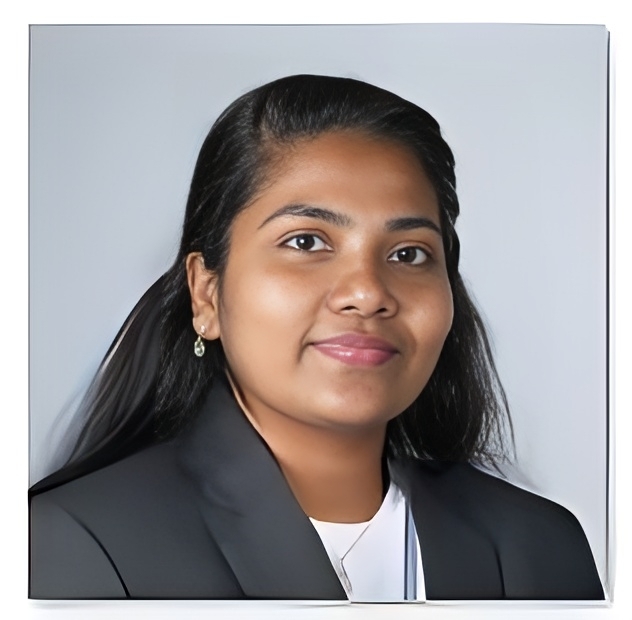
Dr. Razia Sulthana Abdul Kareem, PhD, FHEA, Senior Lecturer
Department of Computing and Mathematical Sciences, University of Greenwich, UKSpeech Title: Embodied AI for Sustainable Agriculture: Intelligent Sensing, IoT, and the Future of Post-Harvest Management
Abstract: The integration of artificial intelligence, advanced sensing, and embodied intelligent systems is opening new opportunities to transform agricultural production and post-harvest management. This speech explores how AI-enabled sensing and machine learning can support early detection, prediction, and management of quality deterioration in stored pome fruits, with particular emphasis on the analysis of chemical volatiles and other non-invasive sensing signals.
By combining intelligent sensing with data-driven models, it becomes possible to move from conventional, reactive approaches to predictive and intelligent post-harvest management. AI systems can identify early indicators of deterioration, classify fruit conditions, optimise storage environments, and support decisions on when produce should be released to the market. These capabilities have direct relevance to embodied intelligence, where sensing, perception, decision-making, and physical action must operate together in complex real-world environments.
The speech will examine the broader industrial, economic, and societal implications of these technologies. For industry, intelligent early-warning systems can help protect large quantities of high-value agricultural produce and improve supply-chain efficiency. Economically, improved prediction and intervention can reduce avoidable post-harvest losses and associated financial costs. From a societal perspective, intelligent assessment of fruit quality can contribute to food security, sustainability, waste reduction, and safer decisions regarding food entering the consumer market.
The speech will conclude by considering how the convergence of AI, sensor fusion, and agricultural science can contribute to a new generation of intelligent, sustainable, and resilient food systems.
Biography: Dr. Razia Sulthana Abdul Kareem is an academic and researcher in the field of Computer Science and Artificial Intelligence, with over a decade of experience in higher education and research. She currently serves as a Senior Lecturer in the Department of Computing and Mathematical Sciences at the University of Greenwich, UK.
Her expertise spans across Machine Learning, Artificial Intelligence, Big Data Analytics, and Computer Vision, with a strong focus on real-world applications, including healthcare, agriculture, and remote sensing. She is actively involved in collaborative projects with the Natural Resources Institute, University of Greenwich, developing machine learning solutions for fungal infection detection in stored fruits and real-time vegetation canopy segmentation.
Dr. Razia has an extensive publication record, with 50 international journal articles published in IEEE, Elsevier, Springer, and other reputed platforms, along with 8 conference papers, 2 book chapters, and 3 patents. She has also served as an invited keynote speaker and session chair at multiple international conferences and faculty development programs. She has received multiple certifications from IBM, NVIDIA, Microsoft, Udacity, and Coursera, further strengthening her technical expertise.
Recognized for her contributions to academia, Dr. Razia is a Fellow of the Higher Education Academy (FHEA, UK). Her work continues to make a significant impact on the fields of AI, machine learning, and applied data science, with a commitment to fostering innovation and sustainable technological solutions.