Keynote Speakers
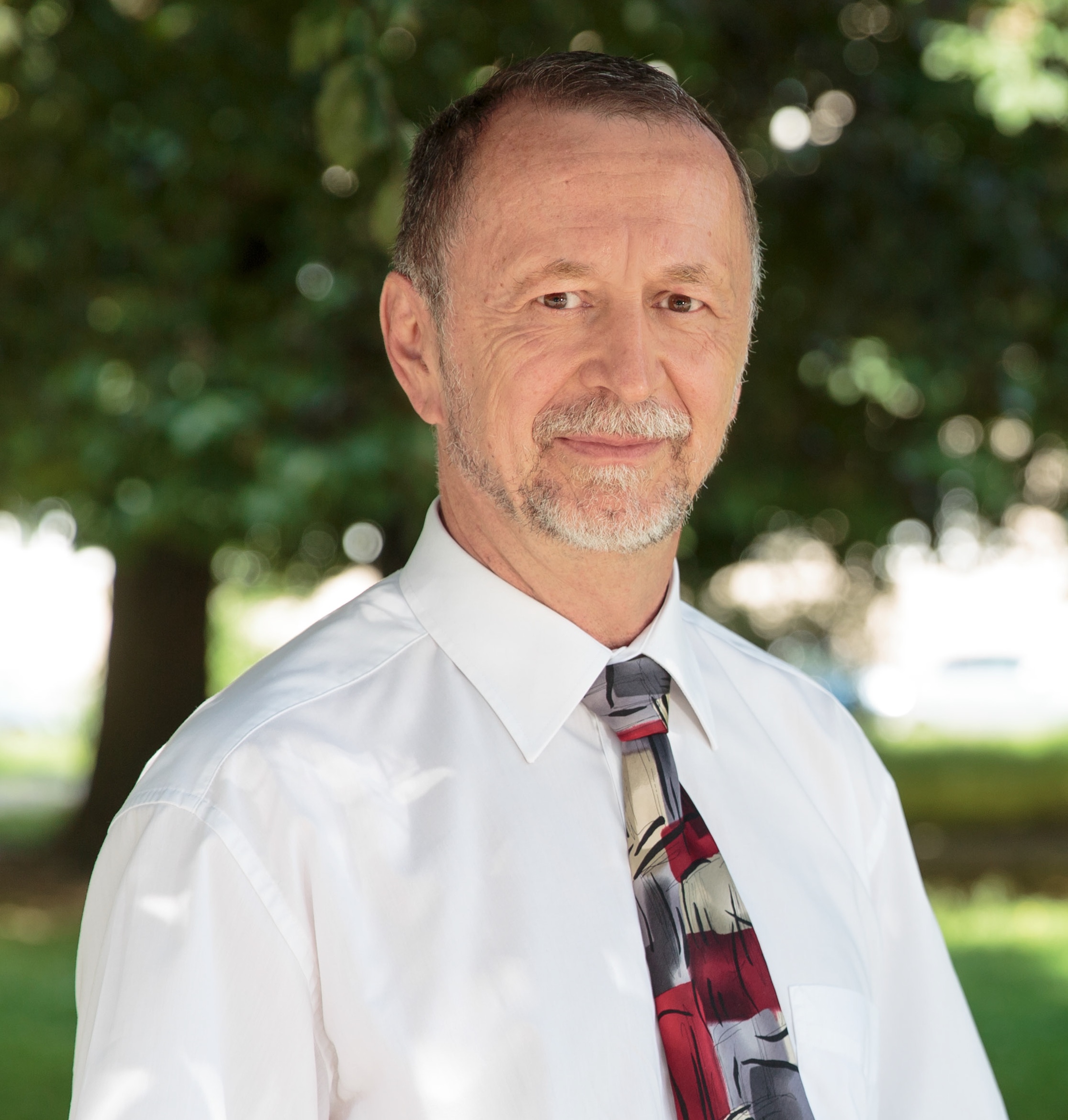
Prof. Vilém Novák
Institute for Research and Applications of Fuzzy Modeling, University of Ostrava, Czech RepublicSpeech Title: Processing and Mining Information from Time Series using Fuzzy Modeling Methods
Abstract: We will present special techniques of fuzzy modeling suitable for applications in time series processing, namely the Fuzzy Transform (F-transform) and selected methods of Fuzzy Natural Logic (FNL). The F-transform is applied to estimation of the trend or trend-cycle of time series, and to estimation of the slope of time series over an imprecisely specified area. Our methods are based on the decomposition of the time series into 4 components: trend, cycle, seasonal component, and random disturbances. The fuzzy transform makes it possible to find arbitrary shape of the trend or trend-cycle. It has been proved that using the F-transform, we can eliminate seasonal component and significantly reduce noise. Moreover, the computational complexity is low.
Methods based on FNL have applications in mining information from time series. Among them, let us mention reduction of dimensionality, finding intervals of monotonous behavior and their characterization using expressions of natural language, finding perceptually important points, measure of similarity between time series, or automatic summarization of knowledge about time series. We also suggest a powerful method for detection and statistical testing of structural breaks in time series.
We will compare our methods with traditional methods and demonstrate that they can on one hand successfully compete with them and on the other hand, both kinds of methods can be combined to increase the effectivity of the processing of time series.
Biography: Prof. Vilém Novák, DSc. is founder of the Institute for Research and Applications of Fuzzy Modeling of the University of Ostrava, Czech Republic. He obtained PhD in mathematical logic at Charles University in Prague, DSc. (Doctor of Sciences) in computer science in Polish Academy of Sciences, Warsaw, full professor at Masaryk University, Brno. His research activities include mathematical fuzzy logic, approximate reasoning, mathematical modeling of linguistic semantics, fuzzy control, processing of time series, and applications of fuzzy modeling. He is pioneer of the fuzzy set theory and author or co-author of 6 monographs and over 350 papers with almost 10000 citations.
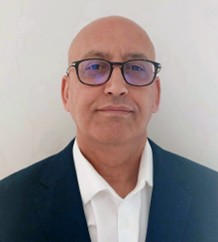
Prof. Mohammed Chadli
University Paris-Saclay Evry, IBISC Lab., FranceSpeech Title: To be updated
Abstract: To be updated
Biography: Mohammed Chadli received his M.Sc (DEA) from the Engineering School INSA-Lyon (France, 1999) and from “Ecole Normale Sup.” (Mohammedia, Morocco), the Ph.D. thesis in Automatic Control from the University of Lorraine (UL), CRAN-Nancy in 2002. He was Lecturer and Assistant Professor at the “Institut National Polytechnique de Lorraine” (UL, 2000-2004). Since 2004, he was Associate Professor at the University of Picardie and is currently a Full Professor at the University Paris-Saclay Evry, IBISC Lab., France. He was a visiting professorship at the TUO-Ostrava (Czech Rep.), UiA (Norway), SMU-Shanghai (2014-2017), NUAA-Nanjing (2018-2024), and the University of Naples Federico II (Italy, 2019).
Dr. Chadli’s research interests include filtering and control problems (FDI, FTC) and applications to vehicle systems, intelligence systems, network systems, and cyber-physical systems. He is the author of books and book chapters (Wiley, Springer, Hermes), numerous articles published in international refereed journals and conference proceedings.
Dr. Chadli is a senior member of IEEE. He is on the editorial board (Editor, Associate Editor) of several international journals, including the IEEE Transactions on Fuzzy Systems, Automatica, the IET Control Theory and Applications, the Franklin Institute Journal, Asian Journal of Control … and was a Guest Editor for Special Issues in international journals and the Vice Dean of the Faculty of Sciences and Technologies (Univ Evry Paris-Saclay). He now serves as the Chair of the IEEE France Section Control Systems Society Chapte, and he is listed in “100 000 Leading Scientists in the World”.
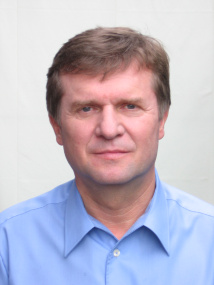
Prof. Sergei Gorlatch
University of Muenster, GermanySpeech Title: Future Applications Based on Mobile Clouds and Software-Defined Networks
Abstract: We consider an emerging class of high-performance applications called Real-Time Online Interactive Applications (ROIA). ROIA are networked applications connecting a potentially very high number of users who interact with the application and with each other in real time, i.e., a response to a user’s action happens virtually immediately. Typical representatives of ROIA are multiplayer online computer games, advanced simulation-based e-learning, and real-time data mining. All these applications are characterized by high performance and QoS requirements, such as: short response times to user inputs (about 0.1-1.5 s); frequent state updates (up to 100 Hz); large and frequently changing numbers of users in a single application instance (up to tens of thousands simultaneous users). This talk will specifically address two challenging aspects of future applications: a) using Mobile Cloud Computing for allowing high application performance when a ROIA application is accessed from multiple mobile devices, and b) managing dynamic QoS requirements of ROIA applications by employing the emerging technology of Software-Defined Networking (SDN).
Biography: Sergei Gorlatch is Full Professor of Computer Science at the University of Muenster (Germany) since 2003. Earlier he was Associate Professor at the Technical University of Berlin, Assistant Professor at the University of Passau, and Humboldt Research Fellow at the Technical University of Munich, all in Germany. Prof. Gorlatch has more than 200 peer-reviewed publications in renowned international books, journals and conferences. He was principal investigator in several international research and development projects in the field of software for parallel, distributed, Grid and Cloud systems, machine learning, and networking, funded by the European Community and by German national bodies.